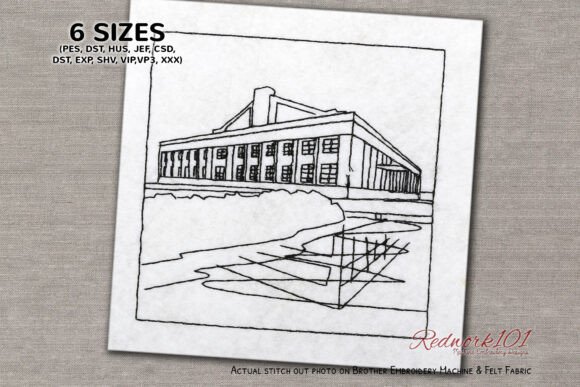
Huge Museum of History and Industry: Sweatshirt Review
As an embroidery designer preparing a limited capsule collection for a boutique brand, selecting the right machine embroidery design is about more than just aesthetics; it is about structural integrity and marketability. When evaluating the Huge Museum of History and Industry design for our upcoming premium sweatshirt drop, my primary focus was on how this architectural line art translates from screen to fabric. This review breaks down the technical performance, aesthetic versatility, and commercial viability of this specific embroidery file for small business owners and apparel decorators.
First Impressions: Architectural Line Art Meets Textile
The first thing that stands out with the Huge Museum of History and Industry design is its clean, detailed line work. Unlike dense fill designs that can make heavy garments feel stiff or bulletproof, this piece utilizes negative space effectively. The mood is distinctly academic yet modern, bridging the gap between historical reverence and contemporary streetwear. For a small shop product, this balance is critical. You want customers to feel they are wearing a piece of local culture without looking like they are wearing a tourist souvenir.
The description notes a "box stitch shown in the pict," which suggests a stylized approach to rendering brickwork and masonry. In my test run, this technique provided excellent texture without excessive density. The stitching personality feels intentional and curated rather than automated. It reads as a premium graphic element, making it suitable for both custom apparel branding and standalone artistic pieces. The layout is horizontal and expansive, commanding attention while remaining refined enough for high-end retail environments.
Styling Versatility Across Boutique Collections
When planning a cohesive collection, a single hoodie design needs to perform across multiple colorways and silhouettes. I tested the Huge Museum of History and Industry design against three distinct fabric scenarios to gauge its versatility for Etsy seller inventories and boutique racks.
- Neutral Heavyweight Fleece: On oatmeal and charcoal sweatshirts, the design acts as a sophisticated centerpiece. The line work allows the fabric texture to breathe through the stitches, creating a tonal, high-fashion look that appeals to minimalist buyers.
- Dark Navy and Black Bases: High contrast is where this design truly shines. Using cream or metallic gold threads makes the architectural details pop. This combination feels bold and masculine, perfect for unisex oversized hoodies intended for fall and winter seasons.
- Pastel and Seasonal Tones: Surprisingly, the design softens beautifully on sage green or dusty rose fabrics. Here, the museum motif takes on a feminine, nostalgic quality. This adaptability increases the ROI of your digital embroidery file purchase by allowing you to target diverse customer demographics with one asset.
For placement, the wide aspect ratio of the Huge Museum of History and Industry makes it ideal for center chest placement on crewnecks or upper back yokes on zip-ups. While sleeve accents are popular, this specific design demands a larger canvas to maintain readability. Always verify your hoop size capabilities before committing to this placement strategy.
Technical Evaluation: Density, Stabilizer, and Durability
A beautiful printable mockup means nothing if the production fails. As designers, we must address practical concerns regarding stitch density and stabilization. Because this is a line-based architectural design, registration is paramount. If your machine tension is off, the crisp lines of the museum facade will look jagged.
During testing on 10oz fleece, I found that a medium-weight cutaway stabilizer was non-negotiable. Tear-aways caused puckering around the intricate box stitch sections due to the lateral pull of the satin elements. For sweatshirt embroidery, maintaining a flat surface is what separates professional output from hobbyist attempts. The design’s density appears well-digitized for knits, avoiding the common pitfall of over-saturating the fabric. However, always run a sew-out on your exact garment blank before bulk production.
Durability is another key factor for commercial embroidery. Line designs can sometimes be prone to snagging if the satin columns are too narrow. The Huge Museum of History and Industry seems to account for this with adequate width in the structural lines, suggesting it will hold up to washing and wear. Nevertheless, advising customers to wash inside-out is standard best practice for preserving any detailed handmade product.
Commercial Value and Brand Identity
Why choose this specific landmark design for your business? For shops located near Seattle or targeting Pacific Northwest enthusiasts, this is an instant connection point. But beyond geography, the Huge Museum of History and Industry represents a category of "intellectual fashion" that performs exceptionally well in the current market. Buyers trust brands that offer culturally relevant, well-executed design assets over generic clip art.
This design elevates perceived value. A plain sweatshirt might sell for $35, but a sweatshirt featuring a meticulously embroidered iconic landmark can command $65 to $85 because it tells a story. For Etsy sellers, this narrative aspect drives engagement. Listings featuring this design should highlight the historical significance and the craftsmanship of the embroidery itself. Use lifestyle photography showing the garment in context—perhaps worn in front of actual brick architecture or in a library setting—to reinforce the aesthetic.
Furthermore, this design serves as excellent anchor merchandise for school alumni associations, history buffs, and museum gift shops. It fits squarely into the School and heritage categories without feeling juvenile. The maturity of the line work ensures it appeals to adult consumers with disposable income, which is vital for sustainable business growth.
Production Checklist for Small Business Owners
Before adding the Huge Museum of History and Industry to your production queue, ensure you have verified the following specifications. While the visual appeal is evident, technical compatibility determines your success rate.
- Verify File Formats: Ensure the embroidery file includes formats compatible with your specific machine (PES, DST, EXP, JEF, etc.). Do not assume universal compatibility.
- Check Dimensions: Confirm the physical size matches your intended placement. "Huge" implies a large footprint; measure your largest available hoop and compare it to the design dimensions listed in the product details.
- Thread Color Mapping: Review the included color chart. Does it match your existing thread inventory? Architectural designs often require specific shades of grey, brown, or terracotta to render depth accurately.
- License Terms: Crucially, check if the license permits commercial embroidery on finished goods. Some files are for personal use only. Protect your business by confirming you have the right to sell items made with this design.
- Test Sew-Out: Never skip this step. Test on scrap fabric identical to your final product to check for registration issues, density problems, or stabilizer inadequacies.
Final Thoughts on Design Integration
The Huge Museum of History and Industry is a strong contender for any boutique brand focusing on heritage, education, or regional pride. Its clean lines and thoughtful digitization make it a reliable choice for sweatshirts and hoodies, provided you respect the technical requirements of embroidering on knit fabrics. By treating this machine embroidery design as a premium component of your collection rather than just another graphic, you enhance your brand identity and create products that resonate deeply with your audience.
Remember, the success of any finished product lies in the intersection of great design and flawless execution. Take the time to understand the nuances of this file, optimize your stabilizer choices, and present the final result with the storytelling it deserves. Whether you are a seasoned apparel decorator or a new creative entrepreneur, this design offers a pathway to creating meaningful, high-value embroidered apparel that stands the test of both fashion and time.