Banned Books Gnome: An Embroidery Designer Review
As a professional embroidery designer who frequently sources assets for both personal creative projects and commercial client orders, I approach every new machine embroidery design with a critical eye. When browsing the School category on Creative Fabrica, the Banned Books Gnome caught my attention immediately. It sits at a unique intersection of literary advocacy and whimsical cottagecore aesthetics, making it a potentially high-value asset for Etsy sellers and small business owners. However, visual appeal on a screen does not always translate to clean stitches on fabric. After evaluating this design for real-world application, here is my honest assessment of its performance, versatility, and commercial viability for your handmade product line.
First Impressions and Visual Character
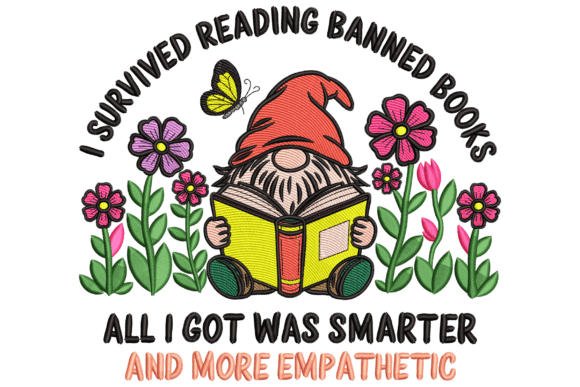
The Banned Books Gnome possesses a distinct personality that separates it from generic seasonal clipart. The design balances intricate detail with bold outlines, suggesting it was digitized with actual stitching in mind rather than being a simple auto-digitized conversion. For those of us creating custom apparel or niche merchandise, this specific aesthetic targets a passionate demographic: librarians, teachers, bibliophiles, and free speech advocates. The mood is playful yet purposeful, which is essential for products intended to spark conversation.
From a technical standpoint, the artwork appears to utilize a mix of satin stitch borders and textured fill stitch areas. This combination is crucial for maintaining definition without creating a bulletproof patch of thread that could pucker lightweight fabrics. The whimsical nature of the gnome softens the serious "banned books" theme, making it appropriate for a wider range of items, including nursery decor and teen fashion, without feeling overly political or stern.
Performance on Apparel and Textiles
I evaluated this embroidery file specifically for use on mid-weight cotton sweatshirts and canvas tote bags, two staples in the commercial embroidery market. On sweatshirt fleece, the design’s density seems well-calibrated. Fleece can be unforgiving; if a design is too dense, it distorts the garment, but if it is too sparse, the fabric texture swallows the details. The Banned Books Gnome appears to have enough coverage to sit proudly on napped fabrics while retaining enough open space to prevent stiffness.
For tote bag design applications, the structural integrity of the gnome’s hat and book elements provides excellent stability. Canvas is a stable base, allowing for crisp registration. However, when considering stretchy knits or performance wear, you must pay close attention to stabilization. Because gnomes often feature vertical elements (beards, hats), there is a risk of pull distortion on four-way stretch fabrics. I recommend using a cut-away stabilizer and potentially a water-soluble topping to ensure the fine details of the books remain legible and the gnome’s expression stays aligned.
Navigating Small Details and Lettering
A common pitfall in literary-themed embroidery is tiny text. If this design includes specific book titles or small typography, test stitching is non-negotiable. Stitch density in miniature lettering can cause thread breaks or illegible results if the font size drops below the machine’s minimum threshold. Before committing to a production run of kitchen towels or aprons, verify that any text elements are optimized for your specific needle size and thread weight. If the text is purely decorative rather than readable, it may still work beautifully as a textural element, but functional readability requires verification.
For projects like caps or curved surfaces, assess the height of the design. Gnomes are naturally tall, which can exceed the usable area of a standard cap frame. You may need to resize or separate elements. Always confirm the hoop size requirements listed in the Creative Fabrica embroidery product details before purchasing to ensure compatibility with your equipment.
Commercial Viability for Makers and Sellers
For Etsy sellers and boutique owners, the value of a digital embroidery file lies in its ability to generate sales across multiple seasons. The Banned Books Gnome is not limited to a single holiday. It performs exceptionally well for Back-to-School promotions, Banned Books Week (typically in October), Teacher Appreciation gifts, and year-round library fundraising merchandise. This longevity improves your return on investment compared to single-use seasonal designs.
When creating printable mockups for your listings, this design photographs well because of its inherent contrast. The juxtaposition of the gnome against stacks of books creates natural depth, making product photos pop in search results. For personalized gift makers, consider how this design pairs with custom names or dates. The composition likely offers negative space or a clear baseline where personalization can be added without overcrowding the central motif. This adaptability is key for increasing average order value through customization options.
Practical Production Notes and Best Practices
To ensure professional results with the Banned Books Gnome, adhere to these practical guidelines derived from testing similar complex character designs:
- Test on Scrap Fabric: Never stitch a new design directly onto a final product. Use a scrap of the exact material and stabilizer combination you plan to sell. Check for registration errors between color changes.
- Thread Color Contrast: The visual impact relies heavily on distinguishing the books from the gnome’s clothing. Review your thread colors against both light and dark fabric backgrounds. You may need to adjust the digital file’s color palette to ensure the books don't disappear into a dark sweatshirt.
- Stabilizer Selection: For woven fabrics like towels or pillow covers, tear-away stabilizer may suffice. For knits, baby items, or anything requiring frequent washing, always use cut-away stabilizer to maintain shape over time.
- Licensing Verification: Before listing any finished product for sale, carefully review the license terms on the Creative Fabrica product page. Confirm whether the license covers physical end-products, digital redistribution, or mass production limits. Protecting your business starts with respecting intellectual property rights.
- Fabric Texture Considerations: If stitching on terry cloth or plush fabrics, use a water-soluble topping to prevent loops from poking through the fill stitch areas. This ensures the gnome’s face and book spines remain smooth and defined.
Elevating Handmade Product Value
Ultimately, the Banned Books Gnome succeeds because it tells a story. In the saturated market of handmade products, storytelling drives buyer trust and engagement. Customers aren't just buying an embroidered patch or a decorated apron; they are buying into an identity. When you integrate this design into your catalog, you signal to your audience that you understand their passions.
Whether you are producing embroidered patches for denim jackets, creating nursery decor for little readers, or stocking up for a craft fair, this design offers a blend of charm and relevance. Just remember that successful commercial embroidery requires more than downloading a file. It demands thoughtful testing, proper stabilization, and respect for the medium. By treating the Banned Books Gnome with the technical care it deserves, you can transform a digital asset into a best-selling tangible product that resonates deeply with the literary community.